Fall arrives in Dallas after months of operating conditions that push transport refrigeration systems close to their design limits. Summer in the DFW area is not gentle on equipment.
Ambient temperatures regularly break 100 degrees, and condensers spend months fighting heat that works against their ability to shed it. The wear from that period builds up, even in units that never triggered a single alarm all summer.
Fall is when that wear needs to be found and corrected. We work with fleet operators across the Dallas-Fort Worth area on fall PM schedules, and the pattern is pretty consistent. Operators who bring in a reliable reefer technician in October or early November head into the holiday freight period with units they can actually count on.
Those who defer end up handling emergency calls in December when there is no slack left in the dispatch schedule. Here is what a well-planned fall service program covers and why the timing of it matters.
Why Summer Leaves Wear That Fall Service Needs to Address
The wear that Texas summers leave in a reefer unit is not always visible as an alarm or a performance failure in real time. Condenser coils that spent four months fighting 100-degree ambient temperatures accumulate debris faster than in cooler seasons, and that buildup does not disappear when the outside air cools in October.
A condenser heading into fall with months of road dust layered on the coils still cannot release heat as efficiently as a clean one, even when the ambient temperature has dropped significantly.
Refrigerant systems that worked through summer under elevated pressure stress may be running slightly low from a pinhole leak that was never big enough to trigger a shutdown alarm. Belts and hoses that were borderline in June have now logged hundreds more operating hours under heat.
Electrical connections exposed to months of heat cycling may have started to loosen without yet producing a fault. Any one of those conditions increases risk as loads get colder and delivery schedules tighten heading into winter.
What a Fall Reefer PM Service Covers
A fall PM visit is a complete system assessment, not a surface-level check. We start with the condenser and evaporator coils, cleaning both and inspecting for any physical damage that summer operating conditions may have caused.
A thorough coil cleaning on a DFW unit coming out of summer often reveals buildup that has been significantly reducing heat transfer efficiency, which explains why some units were running continuously in August without producing an obvious fault code.
A fall PM visit covers the full system, not a single component:
- Refrigerant checked with a full pressure reading and leak detection, not just a gauge check at the service port
- Compressor oil level and condition verified
- Belts, hoses, and filters assessed against service intervals and replaced where needed
- Wiring harnesses checked for chafing, connections checked for corrosion or loosening
- Controller function tested and thermostat accuracy verified
- Full run test confirming pulldown from ambient temperature to set point before the unit goes back into service
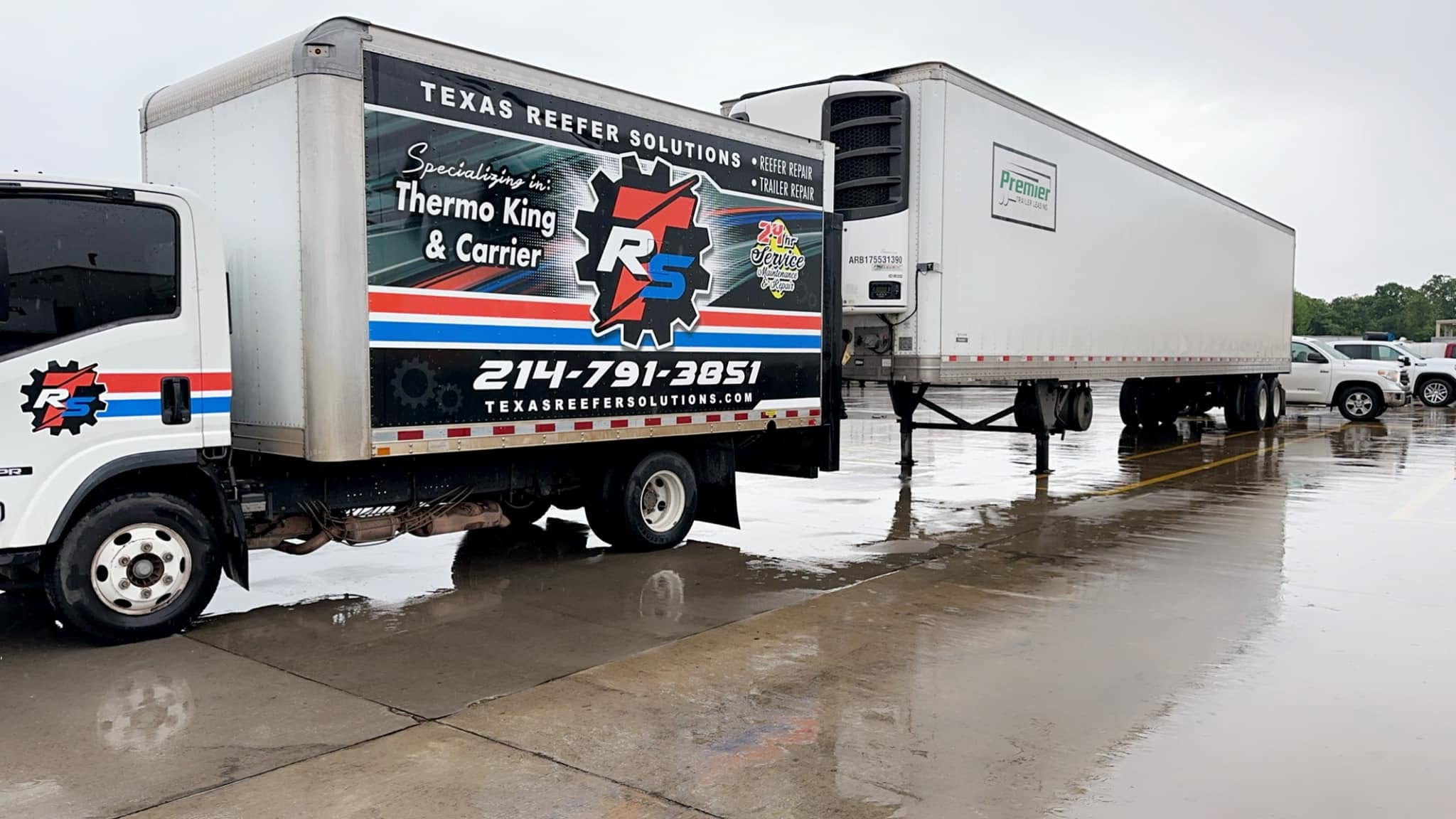
Because trailers stay in rotation right up until the visit, technicians reach most yards as part of our 24/7 mobile service, arriving with everything needed to complete the PM on-site rather than pulling a unit into a shop.
Not sure when your units were last serviced? Call 214-791-3851, and we will help you build a fall PM schedule before the holiday freight rush fills the calendar.
Thermo King and Carrier Transicold Service for Mixed Fleets
Fleet operators running a mix of Thermo King and Carrier Transicold units across their trailers sometimes find scheduling complicated by the need to coordinate with multiple vendors or wait on brand-specific parts between visits. Our mobile service units carry parts for both brands, so a mixed-fleet reefer service rotation doesn’t need to be split or delayed.
Both Thermo King and Carrier Transicold systems have different component layouts, controller systems, and diagnostic procedures, and our service approach matches each brand’s specific design.
On Thermo King units, the fall service includes a review of the controller’s stored alarm history from the summer months, which often reveals low-level faults that were reset at the display but never properly diagnosed. On Carrier Transicold units, the condenser and refrigerant system are the primary fall focus, along with brand-specific electrical component checks.
One call, one visit, both brands covered without splitting the schedule.

Scheduling Around Dispatch Without Disrupting Operations
The logistics of fleet PM scheduling are often what cause operators to defer service. Taking all units offline at once is not realistic, and building a schedule that does not pull too many trailers out of rotation simultaneously requires planning before the visits begin.
We work with fleet managers to build that rotation in advance, so two or three units are serviced at the yard at a time while the rest of the fleet stays available for dispatch.
A mobile technician comes to your yard location with all the tools and parts needed to complete each visit on-site. There is no towing, no coordinating trailer transportation, and no time spent waiting at a shop.
KCN Logistics, a Dallas-area fleet account, described us as their go-to vendor after we handled their unfolding emergency service during extreme heat and got their trailer running again quickly (KCN Logistics LLC, Google).
That same reliability applies to scheduled fall rotations, and for most fleet operations in the DFW area, a well-structured fall PM program means every unit is serviced before the holiday freight period without missed deliveries.
Refrigerant and Electrical Checks Before Cold Weather Arrives
Refrigerant issues that were partially masked by summer heat become more consequential in colder ambient conditions, but that does not mean they should wait until cold weather reveals them.
A system running slightly low on refrigerant that held the set point through summer under higher compressor effort will respond differently in fall when loads get colder and set points drop. Finding and sealing a slow leak in October is a routine repair. Finding it on a January run with a fully frozen load is a roadside emergency.
Electrical system checks in the fall are equally time-sensitive. Summer heat accelerates the degradation of wiring insulation, and connections that have started to loosen after months of heat cycling and vibration may not produce an obvious fault until cold weather adds contraction stress to the harnesses.
We inspect every harness and connection point, test controller function, and verify thermostat accuracy on every fall PM visit specifically because electrical faults tend to surface first when ambient conditions change significantly.
Getting the Fleet Ready Before the Holiday Freight Window Closes
The practical deadline for fall fleet preparation in the Dallas market is early to mid-November. After that point, refrigerated freight demand starts climbing through the holiday and winter produce shipping season, and pulling units off rotation for PM becomes progressively harder to do without affecting delivery commitments.
Fleet managers who treat fall service as a scheduling priority rather than something to fit in when time allows consistently head into the busiest freight period of the year with units that have already been checked, corrected, and confirmed.
We cover the full DFW area for fleet PM visits, reaching yards and locations including:
- Mesquite, Forney, and Balch Springs
- Crandall, Pleasant Grove, and Heartland
- The full metro along I-35, I-20, I-30, and I-45
Frequently Asked Questions
Q: When should I schedule fall PM service for my reefer fleet in Dallas?
A: The practical window is October through early-to-mid November, before the holiday freight period increases delivery pressure and makes pulling units off rotation harder to schedule.
Q: Can a mixed fleet of Thermo King and Carrier Transicold units be serviced in one visit?
A: Yes. Mobile service trucks carry parts for both brands, so a fall PM rotation across a mixed fleet does not need to be split between two vendors or delayed while parts are ordered.
Q: How many units can be serviced in a single yard visit?
A: A technician typically services two to three units per visit, coordinated around dispatch so the rest of the fleet stays available. The schedule is built with the fleet manager in advance.
Q: What does a fall PM visit check that a routine PM might not emphasize?
A: Fall service places extra weight on condenser coil buildup from summer heat, refrigerant pressure after months of elevated stress, and electrical connections that may have loosened from heat cycling, since these commonly surface as loads get colder.
Q: Does fall PM prevent all winter breakdowns?
A: No service eliminates every possibility of a breakdown, but addressing summer wear before winter loads and tighter schedules arrive removes many of the most common causes we see in emergency calls during that period.
Texas Reefer Solutions dispatches to your location anywhere in the Dallas-Fort Worth area for reefer repair, preventative maintenance, and Thermo King or Carrier Transicold service. Call us anytime at (214) 791-3851, or use the contact form for scheduled service and fleet inquiries. Standard hours are Monday through Friday, 7:00 AM to 7:00 PM, with after-hours emergency service by appointment, and emergency calls answered at any time.