Produce is among the most demanding cargo a refrigerated trailer carries. The temperature window is narrow, and the cargo’s tolerance for even brief temperature swings is low. Fresh berries, leafy greens, and cut vegetables, you know, they all have specific ranges they need to stay within from loading dock to delivery.
A reefer unit running on deferred maintenance just is not built to hold those ranges the way produce work demands.
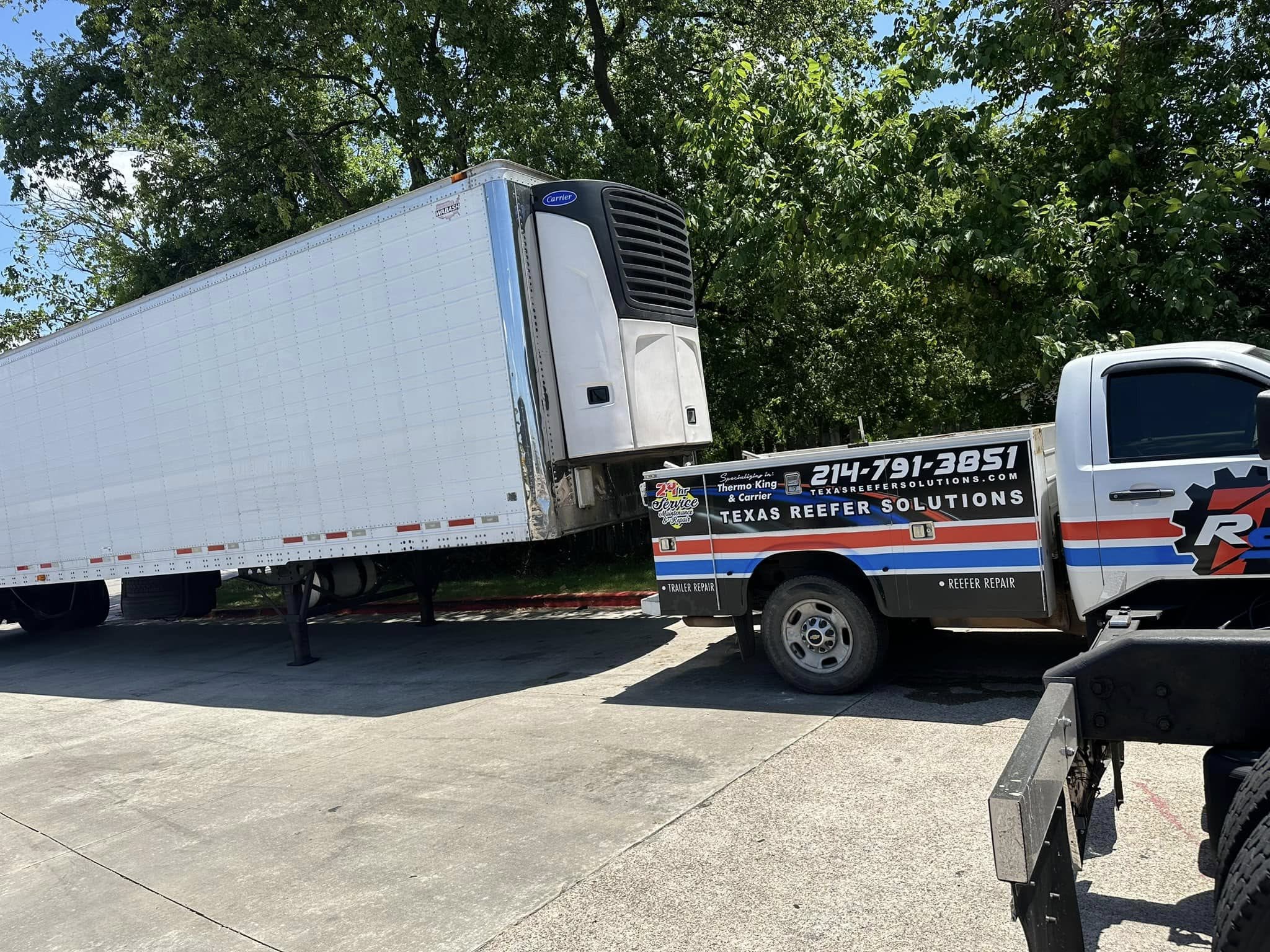
We service refrigerated trailers across the Dallas-Fort Worth area, and produce haulers make up a big portion of the calls we take. What we see, pretty consistently, is that the equipment problems hitting produce loads are almost never sudden.
They are gradual issues that went unaddressed until a load was already on the trailer. A professional reefer technician catches those problems before they become a mid-haul crisis, and that kind of early intervention is exactly what keeps a produce load from turning into a loss.
Here is what drivers and fleet managers hauling produce in Dallas need to understand about keeping refrigerated trailers ready for this type of work.
Why Produce Transport Puts Different Demands on a Reefer Unit
Refrigerating a produce load is not just about keeping cargo below a temperature ceiling. Different types of produce have different ideal ranges, and the margin between acceptable and damaged is narrower than it is for frozen freight. A unit pulling down to 34 degrees on a frozen load has a few degrees of variance to absorb without consequence.
The same unit on a load of fresh herbs or strawberries needs to hold that range with consistency, because even brief periods above the target temperature affect product quality in ways that may not be visible at delivery but show up within 24 hours at the receiving end.
Produce transport also tends to involve more trailer door openings than other cargo types, particularly on multi-stop city routes in and around Dallas. Every door opening introduces warm, humid ambient air into the trailer, which immediately puts demand on the evaporator and raises the trailer’s internal temperature.
A reefer unit running at full output capacity without any maintenance margin cannot absorb that added demand on a warm afternoon without letting the temperature climb between stops, which is exactly the margin regular reefer service is meant to protect. The load bears the cost of that, and in produce transport, the cost of a temperature deviation is immediate and measurable.
Pre-Load Preparation That Protects Produce From the First Mile
The state of a refrigerated trailer before a produce load goes on it matters as much as how the reefer performs during transit. Pre-cooling the trailer to set point with the doors closed before loading is a practice that protects produce from the moment it enters the trailer.
Loading into a trailer that has not reached set point means the cargo immediately starts experiencing temperatures above its target range while the unit works to pull down, and that pull-down period creates a temperature excursion that affects the product without showing up as a reefer fault.
Door gasket condition is a preload factor that produce haulers need to check consistently. A door seal that has softened, cracked, or developed gaps along its contact surface allows warm ambient air to leak into the trailer continuously during transit.
That constant infiltration creates an additional load on the evaporator and generates uneven temperatures from the nose to the rear doors. Door gaskets are a straightforward replacement during any service visit, and for a produce hauler, a properly sealing door is not a minor maintenance detail.
Loading a produce run this week and not sure your unit is holding the set point? Call 214-791-3851, and we will check it before the load goes on the trailer.
Thermo King and Carrier Transicold Service for Produce Applications
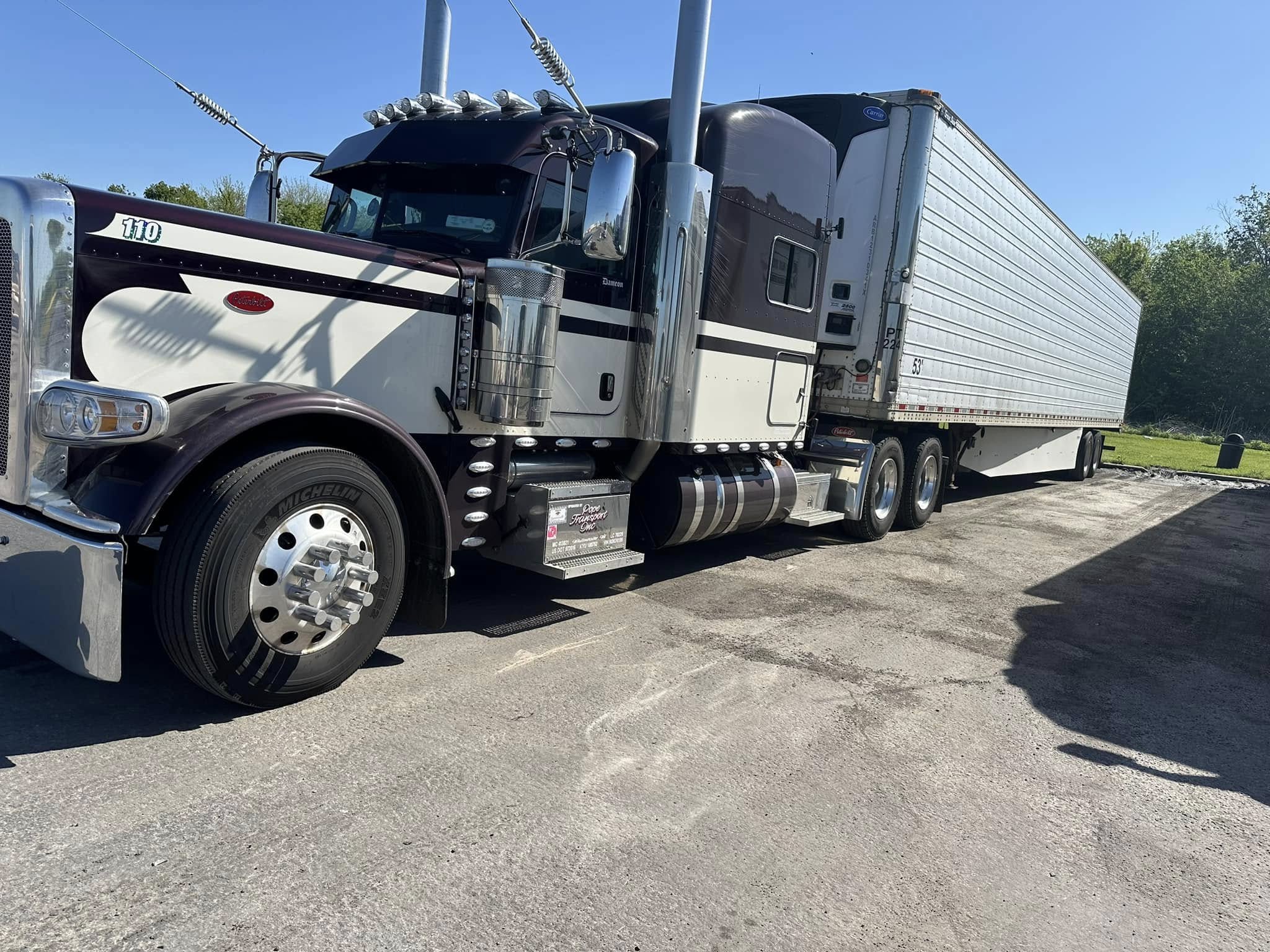
Both Thermo King and Carrier Transicold units are used across the produce transport sector in the DFW corridor, and both require the same attention to temperature accuracy when produce is the cargo.
Controller calibration and thermostat function matter more for produce loads than for frozen freight because the acceptable temperature variance is smaller and the cargo responds faster to any deviation. Thermo King and Carrier service needs can differ slightly, which is why our mobile units carry brand-specific parts for both.
We verify controller accuracy and thermostat function as part of every service visit. A thermostat reading slightly off can cause the unit to cycle at the wrong point, resulting in set point drift that a driver may not detect until the produce has already spent extended time outside its target range.
Any calibration issue or component finding during a produce-focused service visit is addressed on the spot, not scheduled for a follow-up trip.
Preventative Maintenance Before a Heavy Produce Haul Period
Scheduling preventive service before entering a high-volume produce haul period is one of the most practical steps a Dallas produce hauler can take to protect their loads. The condenser and evaporator coils are the starting point.
In the DFW corridor, road dust and debris accumulate on condenser coils at a faster rate than in many other markets because of the traffic volume on I-35, I-20, I-30, and I-45. A dirty condenser cannot release heat efficiently, which means the unit has to work harder to maintain tight temperature control when ambient conditions are warm.
A produce-focused PM visit also covers:
- Refrigerant levels checked and leak-tested, since a system running slightly low can lose its margin once a produce load adds a warm, high-humidity environment inside the trailer
- Belt and hose condition
- Electrical connection integrity
- Filter replacement
- A full run test confirming temperature stability from ambient to set point
A produce hauler heading into a heavy season with a recently serviced unit carries every load with a much smaller risk window.
What to Do When a Reefer Issue Appears Mid-Haul With Produce on Board
When Elton Cenolli called us about his fully loaded ice cream trailer showing a temperature problem in 100-degree heat, we finished what should have been a seven-hour job in two, and the ice cream came off the trailer still frozen (Elton Cenolli, Google).
That outcome depends on the call coming in quickly and the driver taking the right steps in the meantime. For produce loads, those first minutes after a problem becomes apparent matter.
- Keep the trailer doors closed and avoid opening them unless absolutely necessary. Every door opening during a developing reefer problem accelerates temperature loss and reduces the time available to protect the cargo
- Note any alarm codes on the controller display before calling for service, so a technician knows what to bring and where to start
- Call for service rather than resetting the unit repeatedly and continuing the route
We reach drivers across the full DFW area for emergency produce calls, along the major highway corridors and at truck stops and yards throughout the metro.
Frequently Asked Questions
Q: What temperature range does produce need compared to frozen freight?
A: It depends on the product. Leafy greens, berries, and cut vegetables each have a narrower ideal range than frozen cargo, and the tolerance for time spent above that range before quality is affected is much shorter.
Q: How much does pre-cooling a trailer before loading matter for produce?
A: It matters significantly. Loading into a trailer that has not reached set point creates an immediate temperature excursion while the unit pulls down, and that period is not something the reefer can undo later in the run.
Q: Can a worn door seal really affect a produce load?
A: Yes. A gap or crack in a door gasket lets warm ambient air leak in continuously during transit, which raises the load on the evaporator and creates uneven temperatures between the nose and rear doors.
Q: How often should a reefer used for produce be serviced?
A: The same 1,500 to 2,000 operating hour interval applies, but produce haulers running frequent multi-stop routes with more door openings often benefit from checking coil condition and refrigerant levels more often than that baseline suggests.
Q: What should I do if a produce load shows a temperature problem mid-route?
A: Keep the doors closed, avoid opening them unless necessary, note any alarm codes on the display, and call for service. That information lets a technician arrive with the right parts and start the repair immediately.
Texas Reefer Solutions dispatches to your location anywhere in the Dallas-Fort Worth area for reefer repair, preventative maintenance, and Thermo King or Carrier Transicold service. Call us anytime at (214) 791-3851, or use the contact form for scheduled service and fleet inquiries. Standard hours are Monday through Friday, 7:00 AM to 7:00 PM, with after-hours emergency service by appointment, and emergency calls answered at any time.