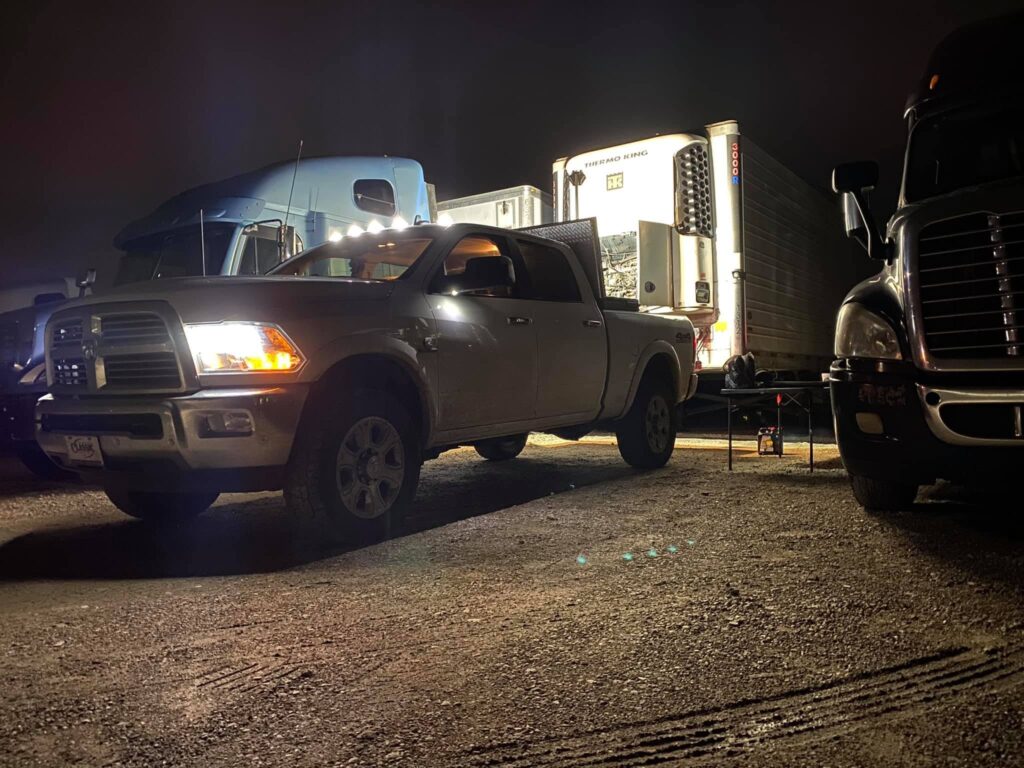
A reefer unit fails differently in January than it does in July. Winter attacks the starting circuit, the fuel, and the heating side rather than the cooling side, and Texas fleets prepare for those faults least.
We run a skilled reefer service in Dallas, TX, out of Texas Reefer Solutions, reaching trailers at yards and docks across the metroplex. We work on Thermo King and Carrier Transicold equipment, with parts for both on the truck.
Most winter callouts we take could’ve been caught during a quick twenty-minute checkback in November. Start with the battery, because a battery that tested fine in October is kind of a different battery at 25 degrees.
Why Cold Weather Is Harder on a Reefer Than Dallas Drivers Expect
Dallas doesn’t really read as a cold-weather market. That’s exactly why winter failures land so hard here. Fleets running out of North Texas prepare for heat, because heat’s the season that actually hurts.
Then a hard freeze shows up in January, catching fleets that skipped a fall fleet preparation checklist, with summer blend fuel still in the reefer tank and batteries nobody’s load-tested since spring.
The unit doesn’t care that the region’s warm on average. It cares about the one night it has to start at 20 degrees. Routes make that worse, too. A trailer loading in Dallas and running north on I-35 can cross into genuinely cold weather within a single day.
The fuel in its tank was blended for a Texas winter, not a Kansas one. Drivers who fuel up south and deliver north find out the hard way what untreated diesel does. And the failure usually happens hundreds of miles from where the fuel was even bought.
What Actually Breaks on a Reefer Unit in Cold Weather
The starting circuit takes the first hit every time. A diesel engine needs more cranking power when it’s cold, and a battery just delivers less of it at the same time. Marginal batteries that started the unit fine all summer stop starting it in December.
Glow plugs behave the same way, working well enough in mild weather and failing once the engine needs real help to fire, which is usually about when a trailer ends up needing refrigerated trailer repair out at the yard.
Fuel’s the second failure mode, and honestly, the one that strands the most units. Diesel forms wax as the temperature drops, and that wax plugs the filter and starves the engine. The reefer tank sits separate from the truck tanks and just gets checked far less often.
That’s why the reefer gels rather than the tractor. Water collected over a humid Texas autumn freezes at the same time and blocks the line from another direction entirely.
The heating side is third, and it’s the one that really catches operators out. The unit spends most of the year never even using it. A reefer holding produce at 36 degrees on a 25-degree night has to add heat instead of pulling it out.
It does that by reversing refrigerant flow through a three-way valve. A valve that hasn’t shifted since last winter may just not shift now. A system that’s low on refrigerant struggles more in heat mode than in cool mode, because making heat draws on that same charge.
What a Pre-Winter Service Visit Should Cover
A winter check isn’t just a shortened version of the summer one. It targets different components entirely. A technician who runs the standard summer sheet in November is going to miss most of what matters. The list’s worth naming before the visit, since it’s basically the flip side of a summer prep checklist for reefer units.
These are the items we work through before the first cold snap, on both brands.
- Load test the battery under real load rather than reading voltage, then clean and tighten the terminals
- Confirm the unit shifts cleanly between cool, heat, and defrost, which is the three-way valve test
- Check refrigerant charge against spec, since heat mode needs more of it than cool mode does
- Drain water from the fuel tank and replace the fuel filter before the season rather than during it
- Inspect belts, hoses, and door gaskets, all of which stiffen and crack faster in cold weather
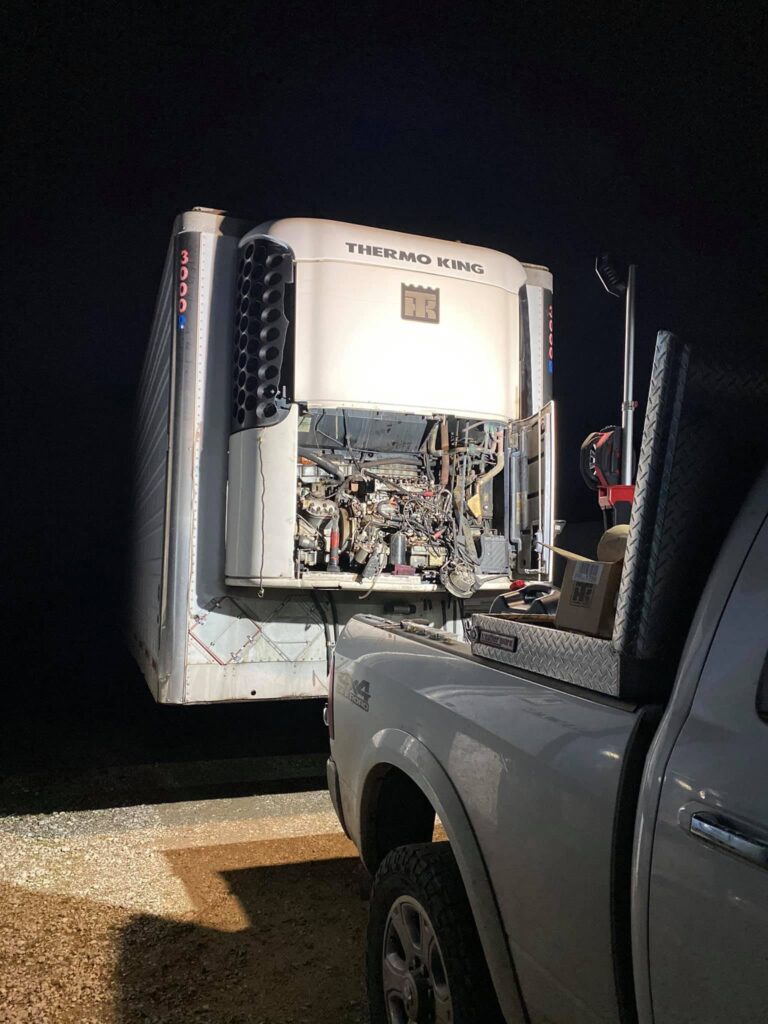
Fuel blend sits alongside that list as an operating decision, and it’s an easy one. Running a winter blend or an anti-gel additive in the reefer tank costs very little. It prevents the most common cold-weather no-start we see, by a wide margin.
Fleets that treat the tractor and forget the trailer are the ones we end up getting called out to. Coolant concentration belongs on the same pass too, and it’s worth checking the mix before the freeze rather than after.
A pre-winter check costs a fraction of a roadside callout at 4 am, so it’s worth getting ahead of it. Get your units on the schedule while the weather’s still mild.
Hearing a unit crank slowly on a cold morning, or notice the heat side acting up before the first freeze? Give us a call at (214) 791-3851, and we’ll get out to the yard and take a look before it turns into a stranded load.
Overcooling, the Winter Problem Nobody Plans For
Freezing the cargo is a stranger risk than losing it to heat, and it happens more often than operators think it does. A unit set to 34 degrees on a 20-degree night can drift below setpoint between cycles, easily.
Produce, beverages, and some pharmaceutical loads get ruined by freezing just as surely as by warming. The claim looks identical on paper, and it costs the same money either way.
Continuous mode helps here, since the unit holds temperature steadily instead of swinging between restarts. That trades a bit of fuel for stability, which is the right trade on a sensitive load in genuine cold.
Sensor calibration matters here too, maybe more than people think. A controller reading two degrees high will happily cool a load right into the freezing range while reporting that everything’s fine.
When a Winter Fault Needs a Technician Rather Than a Reset
Some cold weather symptoms clear up on their own, and some just don’t. A unit that starts hard on the first cold morning, then runs fine after, is telling you the battery or the glow plugs are marginal.
That’s a scheduled repair rather than an emergency. A unit that won’t start at all or starts and dies right away, is usually fuel. That one needs someone with the right equipment out at the trailer.
Heat mode faults always need a technician, no way around it. A unit that won’t produce heat points at the reversing valve or the refrigerant charge. Neither one’s a roadside fix with hand tools.
The same goes for a defrost cycle that leaves ice sitting on the evaporator. A blocked drain or a failed defrost circuit will ice the coil solid within a day. That’s the kind of fault that gets diagnosed and fixed right at the trailer, in the same visit.
Building the Check Into a Seasonal Rhythm
Fleets that avoid winter callouts tend to run two seasonal passes rather than just one annual service. Spring prepares for heat, and autumn prepares for cold. The two lists only overlap by less than half, which is the part most operators underestimate. The other half of that rhythm is really just the summer side of things, and it’s just as easy to let slide.
Staggering the work makes it practical for a fleet in Dallas, TX, that still has trucks to dispatch. Two or three units a week through October and November puts the whole fleet through a winter check without much disruption. No week loses more than a single trailer that way. Once the pattern’s set, honestly, the following year kind of takes care of itself.
Put your fleet through its winter pass before the first hard freeze, and start the season with every unit tested instead of just assumed.
Have questions about getting your fleet ready before the freeze, or just want to talk through what your units need? Contact us, and we’ll help you figure out the right next step. You can also reach us at (214) 791-3851 or justin@texasreefersolutions.com.
Related Topics: