
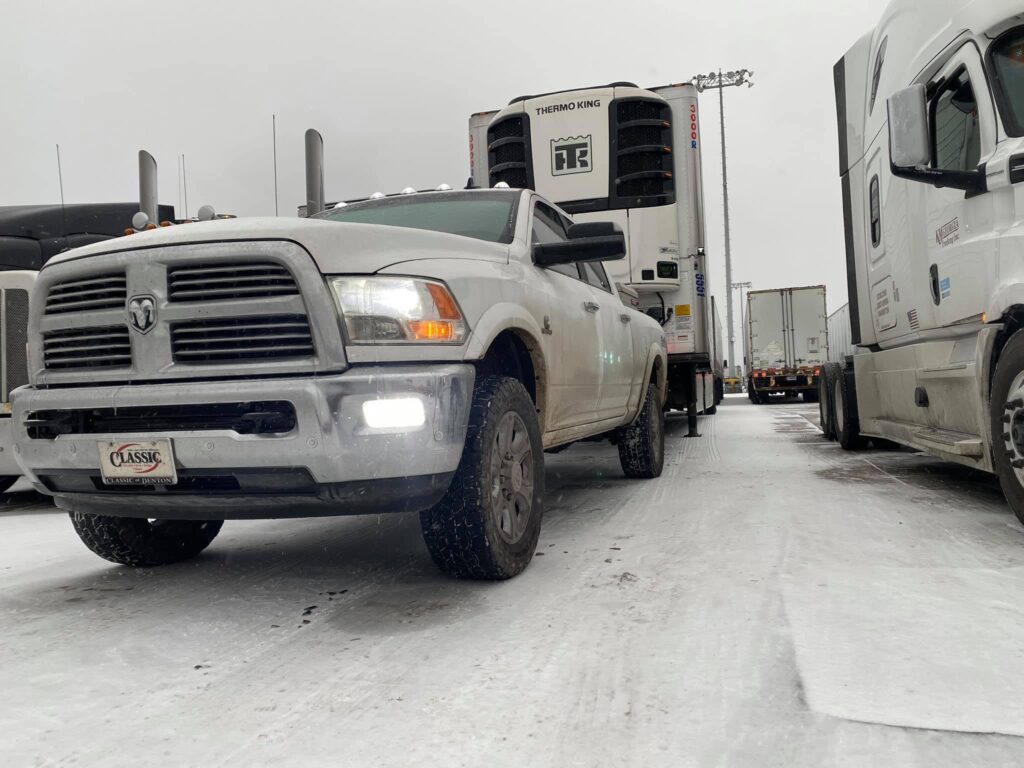
When a reefer unit quits mid-haul, the trailer starts warming immediately, and the load begins moving toward its spoilage threshold in hours rather than days. How much product survives comes down to what happens in the first few minutes.
We built Texas Reefer Solutions around that window and handle emergency reefer repair in Dallas around the clock, reaching stalled trailers with parts already on the truck.
Justin takes the call and does the work himself. That matters during a failure, because the person deciding which parts to bring is the same person who will be standing at your trailer.
What Happens Inside the Trailer the Moment a Reefer Unit Fails
Temperature does not spike the second the unit stops. A properly loaded trailer holds its thermal mass for a while, and frozen product holds considerably longer than fresh. Ambient conditions decide the rest. A shutdown at 2 am in February behaves nothing like a shutdown at noon in July on I-20.
The clock that actually matters runs against your product specification, not against the number on the controller display. Fresh produce above 40 degrees starts accumulating a problem that paperwork cannot undo, and pharmaceutical and dairy loads carry tighter windows still. Drivers across DFW routinely overestimate how long they have.
The First Few Minutes Decide Whether the Load Survives
Keep the doors shut. Every opening dumps conditioned air and pulls ambient heat into the box, and the instinct to go check on the product is the most expensive reflex in this situation. Read the temperature from the controller instead, and if you suspect the sensor is lying, note that for the technician.
Then pull somewhere a service truck can reach safely. A shoulder on I-35 works when nothing else is available, but a truck stop or a yard gives a technician room to work. Write down the alarm codes before you call, because those codes decide which parts come off the shelf.
If the unit is still running but will not cool, describe what you are seeing and say so, since that points to a different set of causes than a hard shutdown.
Why Reefer Units Fail in the Middle of a Haul
Most mid-haul failures are not random. They are the end of a sequence that started earlier, often during a service interval pushed back for a load that could not wait. Refrigerant leaks slowly. Belts fray gradually. Batteries weaken across several cold starts before refusing one outright.
What we find most often when we open a unit that quit on the road:
- Refrigerant loss that had been eroding cooling capacity for weeks before the shutdown
- Condenser coils packed with road film, raising discharge pressure until the unit protects itself
- Fuel starvation from a clogged filter or water sitting in the separator
- Battery and charging circuit faults that strand an otherwise healthy unit
- Belt failure, which takes the unit offline instantly with no warning on the display
- Sensor and controller faults reporting a box temperature that is not real
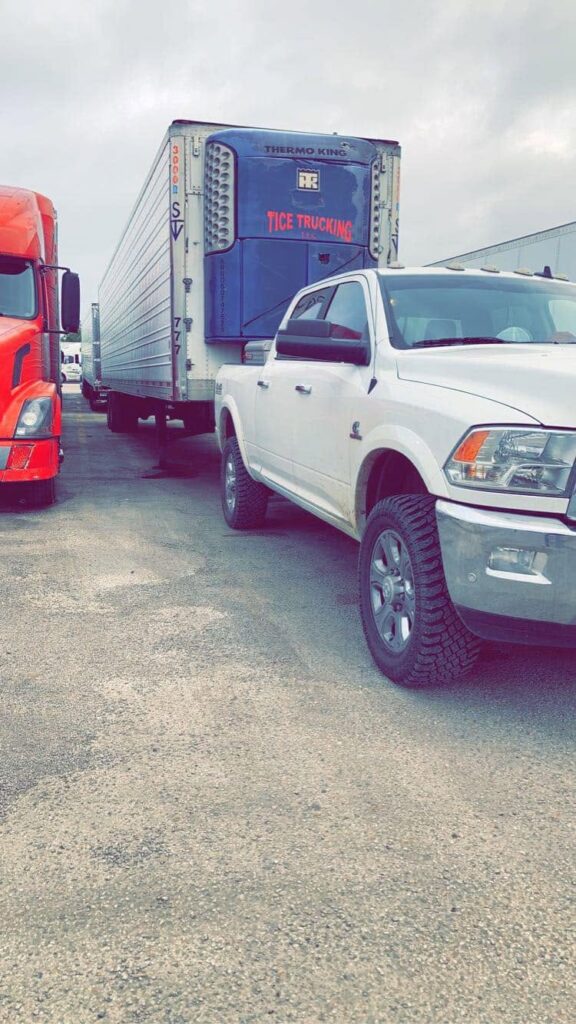
Every one of those leaves evidence behind, which is why the alarm history tells us more than the code on the screen. Texas summers accelerate most of them, and the heat-related causes of unit failure we deal with from June onward rarely give much notice.
What We Do When We Reach a Stalled Trailer
We read the unit before touching anything. The alarm history shows what the controller saw in the hours before the shutdown, which is usually more useful than the active code. From there, it moves to pressures, fuel side, electrical, and airflow, in whatever order the symptoms point to.
Parts for both Thermo King and Carrier Transicold ride on the truck, so diagnosis and repair happen in one visit rather than across two. You get the price before work starts, and that price is what you pay. Elton Cenolli wrote on Google about a reefer loaded with ice cream in 100-degree weather, a job quoted at seven hours elsewhere that Justin finished in two.
Reefer down right now? Call (214) 791-3851. We dispatch across Dallas and the wider DFW area at any hour, nights and weekends included.
When the Load Has to Be Protected Another Way
Sometimes the honest answer is that the repair will take longer than the product can wait. A compressor failure on a trailer already drifting above spec is the clearest version of that. We say so directly rather than starting work and discovering it halfway through, because a shipper making a transfer decision at hour two has options that have vanished by hour five.
That conversation goes better when you already know how the unit was behaving before it quit. Drivers who track compressor warning signs worth catching early tend to call while the load is still in spec, which is a very different repair from one that begins after a shutdown.
Frequently Asked Questions
These are the questions drivers ask us most often while a unit is down and the load is still on board. Each answer stands on its own.
It depends on ambient temperature, product type, and how well the trailer was loaded. Frozen product in a well-packed trailer holds longer than fresh produce in a partially loaded one. In Texas summer conditions, assume the window is shorter than it feels.
One reset is reasonable to rule out a fault from a power fluctuation. Beyond that, repeated resets mask the underlying failure and can damage the compressor, the most expensive component on the unit. If the alarm returns, stop and call a technician.
Most of them, yes. Our service trucks carry parts for Thermo King and Carrier Transicold units, so the majority of roadside failures get fixed where the trailer sits. No towing, no deadhead to a shop, no waiting on a parts order.
Your exact location, the unit brand, any alarm codes, the current box temperature, and the setpoint. That combination tells us what to bring before we leave, and drivers who supply all five usually get a first-visit fix.
Contact Us for Emergency Reefer Repair in Dallas
A reefer failure during transport is a time-sensitive problem. The sooner a technician is moving toward you, the more of the load survives it.
Call (214) 791-3851. Give your location and the alarm codes, and a technician heads your way across Dallas, Mesquite, Forney, and the Balch Springs, I-35, I-20, I-30, and I-45 corridors.
Email: justin@texasreefersolutions.com
Hours:
- Monday to Friday, 7 am to 7 pm
- Saturday and Sunday by appointment
- After-hours repair available after 7 pm on weekdays and on weekends
Related Topics: