
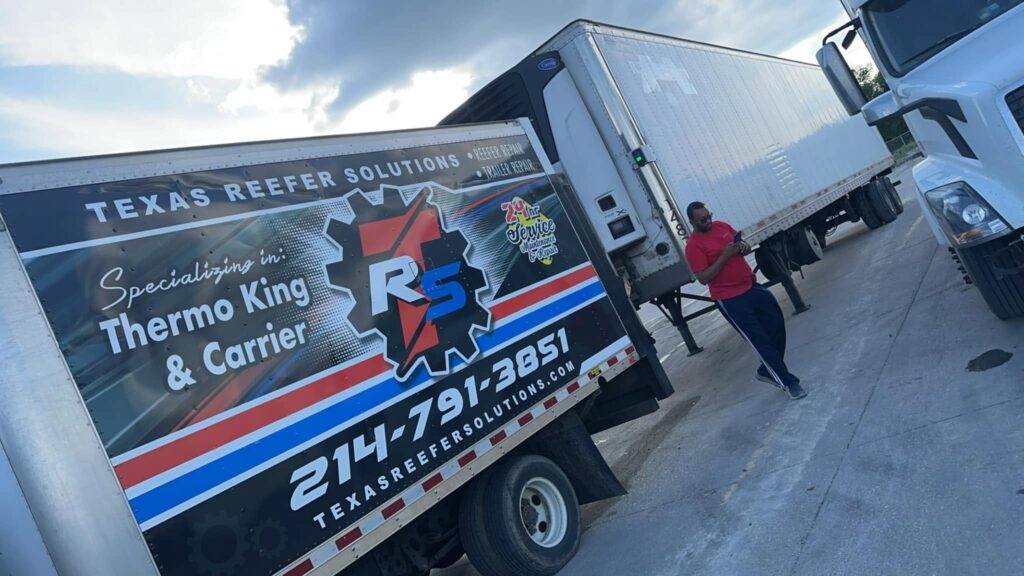
Holiday freight does not break reefer units because the work is unusual. It breaks them because the work never stops. From early November through the last delivery before Christmas, units that normally cycle through quiet stretches run close to continuous, and components already carrying wear give out under a schedule with no slack in it.
We run Texas Reefer Solutions on that calendar rather than against it, providing scheduled reefer service across Dallas for carriers whose heaviest weeks land at the end of the year.
Justin handles every visit personally, which is why fleet customers tend to book the same window year after year. The technician who serviced your units in October is the one who answers when something fails in December, and he already knows what he found the first time.
Why Holiday Freight Puts Different Pressure on a Reefer Unit
Peak season changes the duty cycle more than it changes the cargo. A unit hauling grocery freight in March gets hours of standby between pulldowns.
The same unit in late November holds setpoint through longer dwell times at congested docks, with doors opening more often and warm product going in more frequently. The compressor runs more, the fuel burn climbs, and the margin for a marginal component disappears.
Dallas adds its own pressure. The metroplex sits at the crossing of four interstate corridors, which makes it a consolidation point for refrigerated freight moving in every direction during the back half of the year.
More loads through the same yards means more dwell, more cycling, and more units competing for the same service windows once something goes wrong. The yards that were comfortable in September are not comfortable in December.
What November and December Demand Looks Like on Dallas Lanes
Refrigerated capacity tightens nationally through the fall peak, and the freight that moves during it is the least forgiving kind. Holiday food distribution means dairy, frozen, prepared goods, and produce arriving on windows that retailers do not extend.
A rejected load in that stretch is not rescheduled for next week. It is gone, and the relationship behind it takes damage that outlasts the season.
That dynamic changes what a breakdown costs. Outside peak, a unit down for a day is a scheduling problem. During peak, it is a missed delivery against a contract, on a week when no backup trailer is sitting idle anywhere in the metroplex.
Operations running what grocery and food distribution loads demand already understand this, and they tend to move their service schedules forward rather than letting them land mid-season.
The Service Items That Fail First Under Peak Season Load
Continuous running exposes a specific set of weaknesses, and they are consistent enough to plan around. These are the items we find most often on units serviced right before a heavy run:
- Belts and tensioners, which wear far faster under near-continuous operation than under normal cycling
- Refrigerant charge sitting slightly low, adequate in March and inadequate when the unit never gets to rest
- Condenser coils restricted enough to raise head pressure once run hours climb
- Fuel filters and water separators, which matter more when the unit burns through far more fuel per week
- Door seals and air chutes, which cost real temperature at docks where doors open repeatedly
- Battery and charging circuits, which fail on cold mornings after a season of heavy draw
None of those are expensive to address during a scheduled visit. All of them are expensive to address on a shoulder in December with product on board.
Scheduling Maintenance Around a Peak Season Dispatch Board
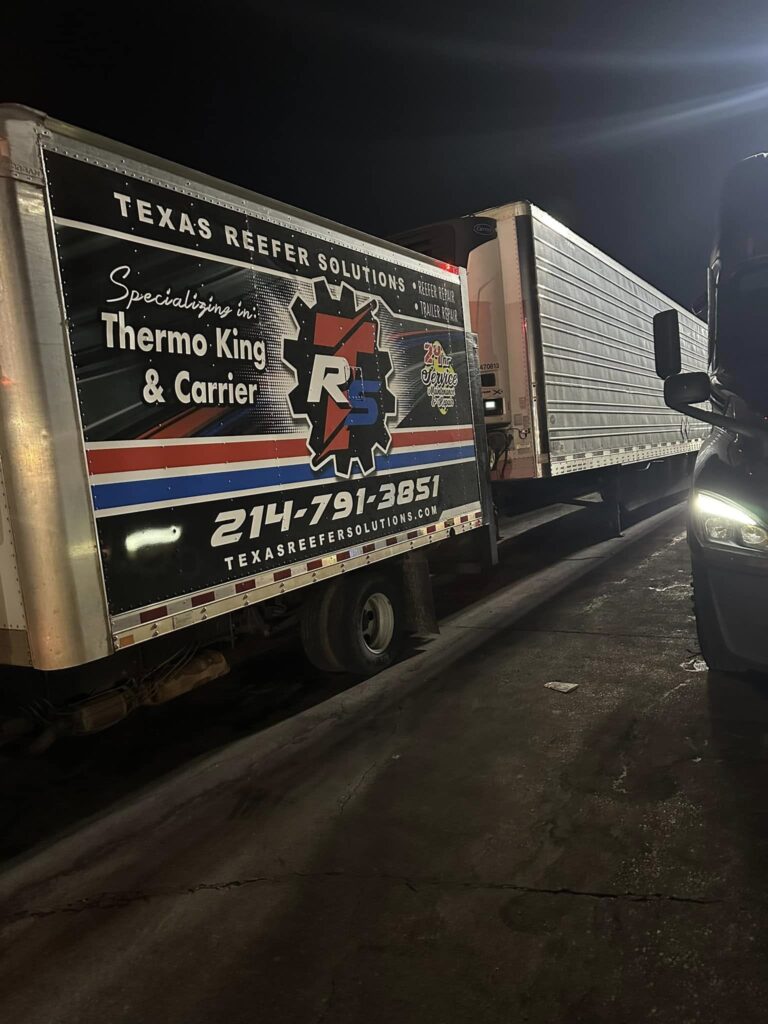
The practical obstacle is never agreement that service is worth doing. It is finding hours in a dispatch board that has none. Our answer is to bring the service to the equipment. We work units at your yard, which removes the drop-off, the shuttle, and the day of lost availability that a shop visit costs.
For fleets, staggering is what makes the schedule survive contact with reality. Running two or three units through service per week from September onward gets the whole fleet covered before November without ever taking more than one trailer out of rotation at a time.
KCN Logistics LLC wrote on Google that we got them running on short notice and became their go-to, and that pattern is typical. Fleets arrive during an emergency and stay for the scheduled work, because the second one is what stops the first from repeating. Preventive service that catches faults early is the difference between a planned cost and an unplanned one.
Book your pre-peak service window now. Call (214) 791-3851.
What Happens When a Unit Goes Down During Peak Weeks
Prevention does not eliminate failures, it reduces them. Something will still go down in December, and the response matters as much as the preparation.
We run emergency calls through the same season as the scheduled work, at any hour, with parts for Thermo King and Carrier Transicold on the truck so the repair finishes at your trailer rather than waiting on an order.
Fleet accounts get priority dispatch during these weeks, and the price is agreed before work starts regardless of how urgent the situation looks. Peak season is exactly when a driver has the least leverage and the most to lose, which is precisely why our pricing policy does not move with the calendar.
Operations that want to see how high-volume fleets schedule service through the year can build the same structure before their own peak arrives.
Get your fleet ready before peak weeks begin. Call (214) 791-3851. September and October service windows fill before November does, and the fleets that book earliest spend December hauling instead of waiting. We schedule on-site maintenance for a single unit or a full fleet across Dallas, Mesquite, Forney, Balch Springs, Crandall, and the surrounding DFW area, Monday to Friday, 7 am to 7 pm, weekends by appointment, with after-hours repair available after 7 pm.
Related Topics: