High-volume fleet operators running refrigerated trailers through Dallas face different pressures than a solo owner-operator. When one unit goes down for an independent driver, it’s a crisis. When one unit goes down in a fleet of 15, it’s a scheduling problem, a dispatch headache, and a customer relationship at risk, all at the same time.
The vendor you rely on for reefer service in Dallas matters far more than most operators recognize, usually until they’ve had a bad experience with the wrong one.
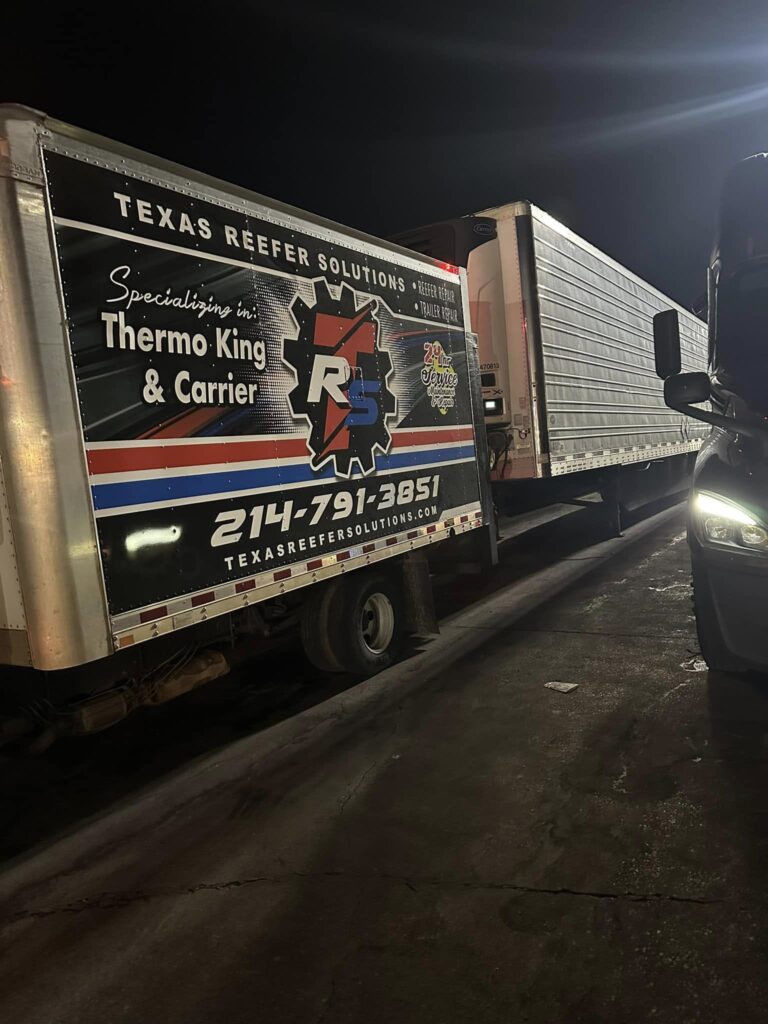
We built Texas Reefer Solutions around exactly this kind of operation. As a trusted reefer service company in Dallas, TX, we show up mobile, on-site, stocked for both major brands, and available when dispatch needs us.
Whether you’re running five refrigerated trailers or fifty out of the DFW area, the approach stays the same. We come to the trailer, not the other way around.
The Reefer Service Problem High-Volume Fleets Know Too Well
Running a high-volume refrigerated fleet means you’ve likely already learned some of these lessons through experience. A vendor that handles individual emergency calls well isn’t always the right fit when you need coordinated service across multiple units consistently.
Factory service centers work for warranty claims, but getting five trailers serviced through a Thermo King dealer means five separate appointments, five different wait times, and five days where those units aren’t available to dispatch.
The deeper problem is inconsistency. A fleet with 10 or 15 units running through Dallas needs the same repair quality and the same communication standard on every call, not just when it’s convenient for the shop. Drivers call in from different locations, units fail at different hours, and the fleet manager has to coordinate it all while keeping deliveries moving.
We’ve covered in detail what high-volume trucking fleets need from a reefer service provider in Dallas and why the model matters for operations running at scale.
How We Handle Multi-Unit Service for Dallas Fleets
We dispatch to wherever the unit is, which for fleet accounts often means a yard, a distribution dock, or a specific corridor along I-35 or I-20. For multi-unit service, we work with the fleet manager to understand dispatch windows and schedule visits accordingly. The goal is getting the work done without pulling units from active runs any longer than the job requires.
Fleet accounts receive priority scheduling for both emergency repairs and preventative maintenance. When a unit breaks down at 3 AM before a Saturday morning delivery run, established fleet relationships don’t sit in the same queue as a first-time caller.
We treat the stakes differently because they are different. Smaller and growing fleets follow the same principles, and that foundation carries forward as the operation grows.
Thermo King and Carrier Transicold Covered Under One Relationship
Mixed fleets are common. Some operators run all Thermo King. Some run all Carrier Transicold. Many run both. Maintaining two separate vendor relationships because one shop only knows one brand adds coordination overhead and cost that a busy fleet manager doesn’t need.
We service both Thermo King and Carrier Transicold units across every call type, including:
- Emergency repair and scheduled maintenance
- Compressor work
- Refrigerant service
- APU service
- Electrical diagnostics
Service trucks carry parts for both brands, so the technician who shows up handles whichever brand is in front of them without a separate parts run. That matters on a 2 AM emergency. It also matters when you’re trying to service six units in a single yard visit.
Preventative Maintenance Built Around Your Dispatch Calendar
For high-volume fleets, preventative maintenance is the single most effective tool for reducing emergency calls over the course of a year. A compressor that gets checked on schedule doesn’t fail on I-35 at midnight. A refrigerant system inspected before summer doesn’t start losing temperature during a 105-degree July week in Dallas.
We work with fleet managers to stagger PM visits so a serviced unit is always available for dispatch. Scheduling all units for the same service window leaves you thin on capacity.
Spreading visits out keeps the fleet moving while every unit stays on a proper service schedule. Most PM visits happen at the yard, which means no deadheading and no coordinating with a shop’s drop-off window.
Handling Emergency Repairs When a Unit Goes Down Mid-Route
Even a well-maintained fleet gets emergency calls. Refrigerant leaks develop. Belts fail. Electrical faults appear on units that passed the last PM clean. When one of your drivers calls in from a truck stop on I-20 with an alarm they can’t clear, we dispatch directly to that location with parts on the truck for both major brands.
Our approach to emergency calls is a first-time fix. We don’t send someone out to diagnose and come back tomorrow when parts arrive. The tech arrives ready to work, and most reefer repairs in Dallas are completed in a single visit.
For a fleet manager who needs that truck back on the road before the next morning’s run, the difference between a one-visit repair and a two-visit repair is sometimes the difference between a delivery made and a delivery missed.
What a Consistent Fleet Service Relationship Looks Like
A fleet maintenance program with us doesn’t require a complex contract or a long onboarding process. It starts with a conversation about:
- Your fleet size
- The brands you’re running
- Your yard location
- Your dispatch schedule
From there, we build a PM rotation that fits your operation and stay available for emergency calls between scheduled visits.
A Dallas fleet manager running eight refrigerated trailers worked out a quarterly PM rotation with us, servicing two units at the yard each month and spreading them across the year so every unit gets two full service visits annually. The results:
- Emergency calls dropped significantly over that period.
- Refrigerant was found low on two units during PM visits before either one ever threw a shutdown alarm.
- A worn condenser belt got replaced as a scheduled cost rather than a roadside breakdown.
That’s the math on routine service over reactive repair, and it becomes clear quickly when you’re running at volume. Reach us through our contact page to set up fleet service or schedule an initial PM visit.
Related Topics: